We make and study colloidal semiconductor nanocrystals, mostly mercury and cadmium chalcogenides, that absorb and emit in the near and shortwave infrared.
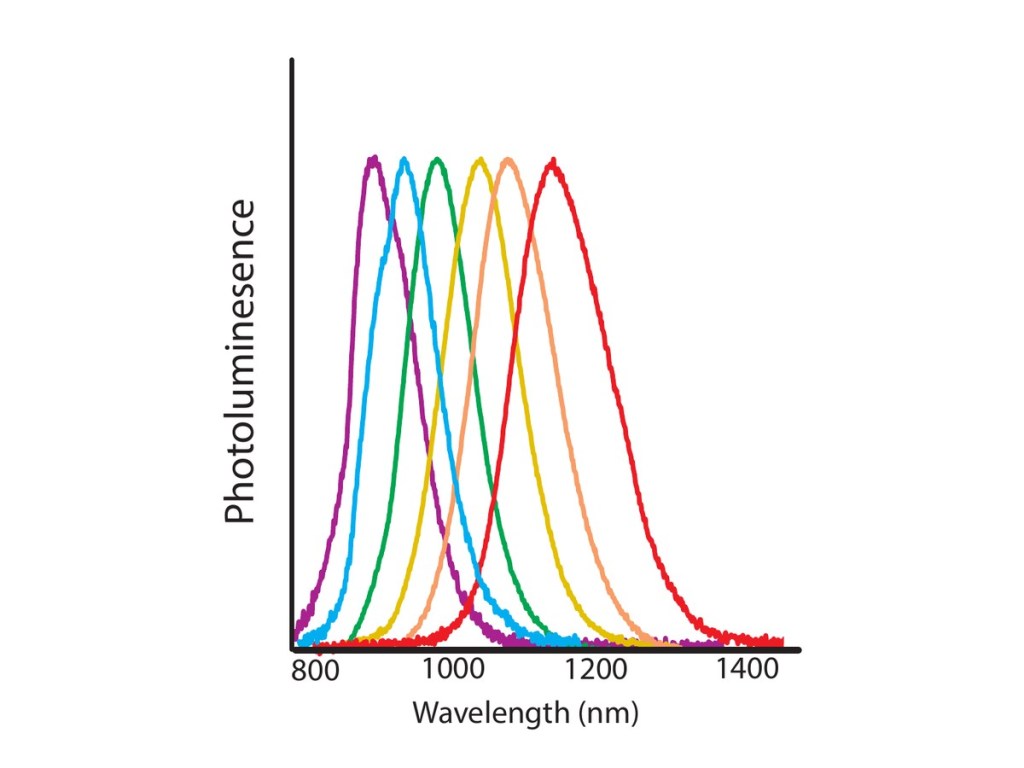
HgTe quantum dots. Mercury telluride quantum dots have mostly been developed for the mid-wave infrared. We have shown that the smallest HgTe quantum dots are excellent shortwave-infrared emitters: they can be tuned continuously and reach near-unity emission efficiency in this window. We have also built heterostructures where energy flows from HgTe nanoplatelets into quantum dots grown on their surfaces, giving bright, tunable SWIR emission.

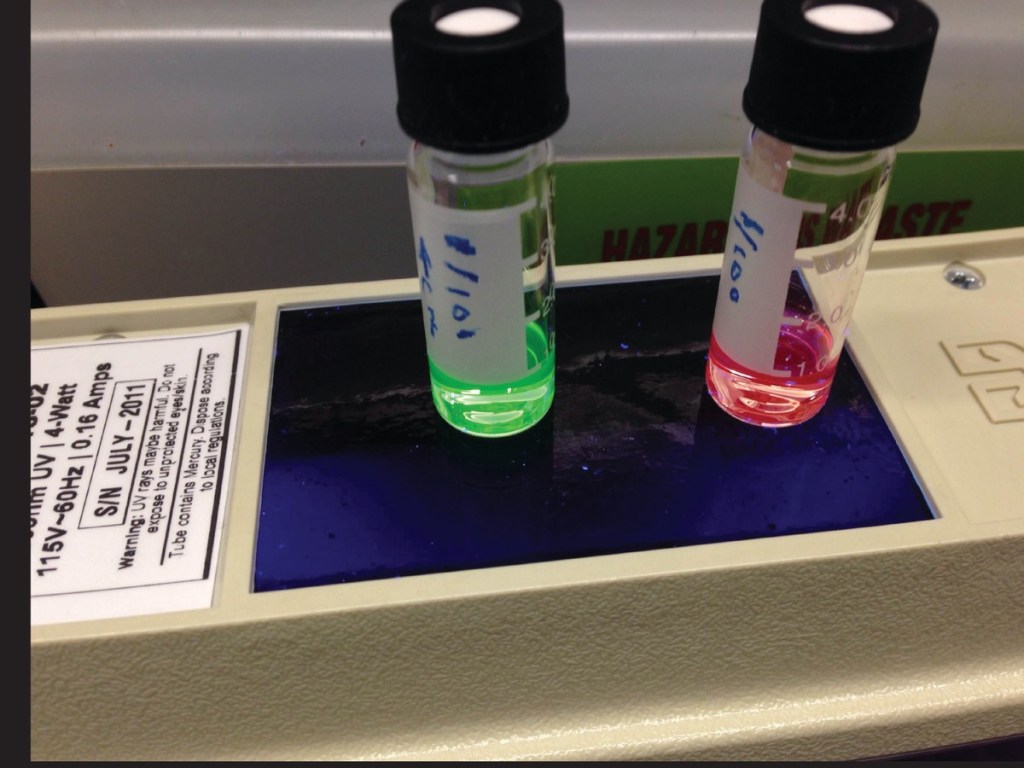
Nanoplatelets. Nanoplatelets are atomically thin sheets with very strong quantum confinement. We have shown how the surrounding dielectric sets their exciton binding energy, grown them to micron scale by seeded growth, worked out how CdTe nanoplatelets grow layer by layer, and used Marcus theory to describe their blinking.

Collaborator: Dugan Hayes (University of Rhode Island).

