We are interested in molecules that absorb and emit far into the infrared, and in what happens when many of them pack together.
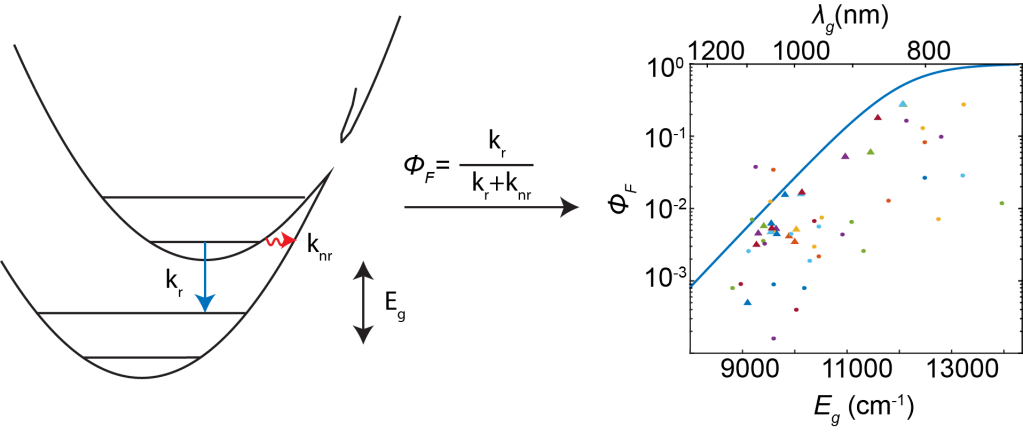
SWIR dyes. Organic molecules that emit between 1,000 and 2,000 nm are rare and usually dim. Our work on energy gap laws showed why: the smaller the gap, the faster energy is lost to molecular vibrations. We have since shown that replacing hydrogen with deuterium can slow that loss. We are interested in how the rules of chemical physics can be used to understand how to systematically improve infrared dyes and avoid energy loss pathways.

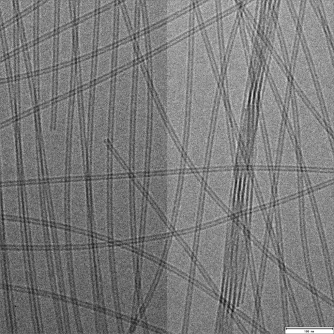
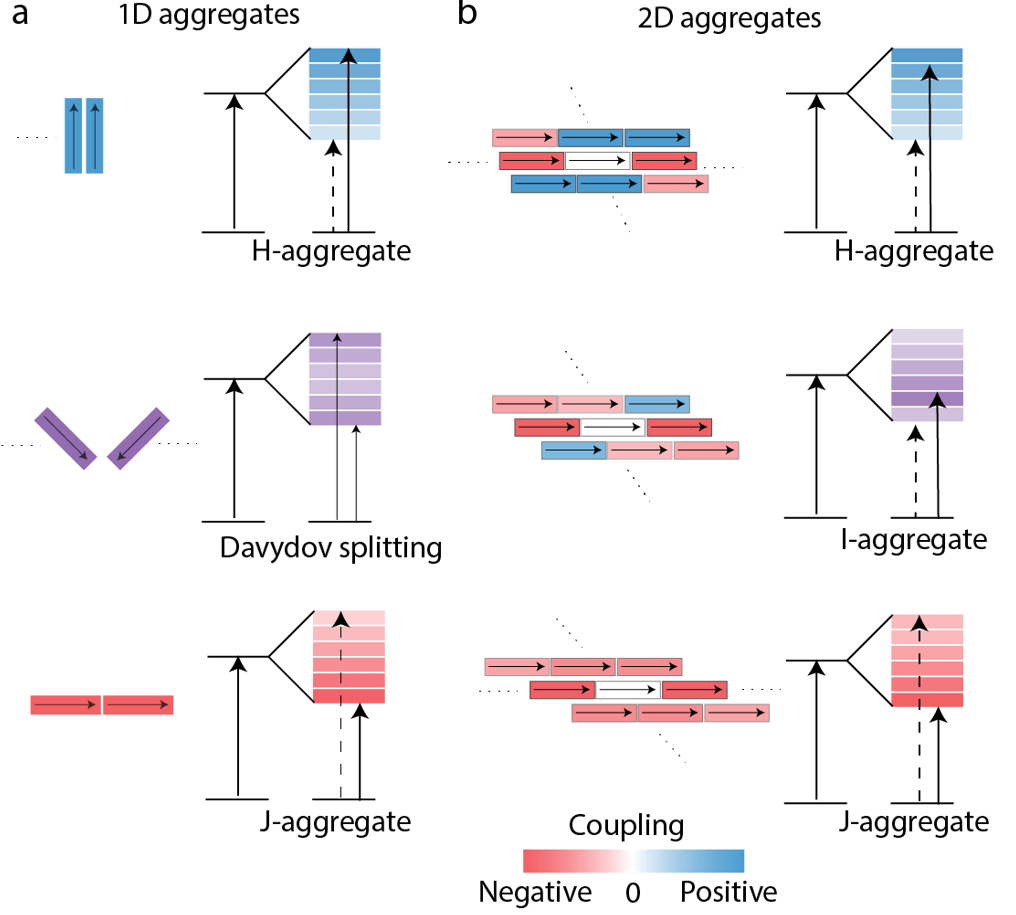
Molecular aggregates. Cyanine dyes can self-assemble into sheets and nanotubes (J-aggregates) whose optical properties come from how the molecules pack. We are interested in structure–function relationships in these aggregates: how to classify them, and how to design them to shift further into the red and to be more superradiant. We do this by studying the thermodynamics of aggregation, imaging their structure with electron microscopy, and coupling them to light to form polaritons. More broadly, we use aggregates to learn how to design dyes that pack in specific arrangements to produce these supramolecular properties.

Collaborators: Ellen Sletten (Dartmouth), Daniel Neuhauser and Alex Spokoyny (UCLA), Chern Chuang (UNLV), and Edward Egelman (University of Virginia).

